
Garmin MARQ Adventurer (Gen 3): specs, who it fits and compatible phones
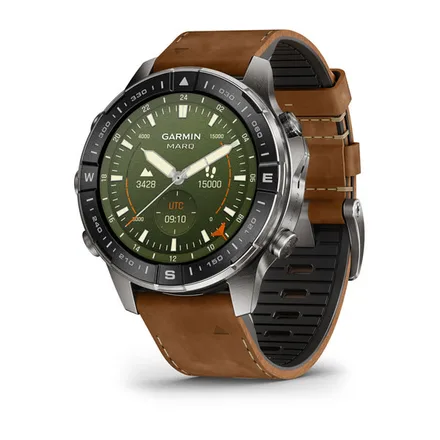
Garmin MARQ Adventurer (Gen 3) is a sport watch released in 2026 that works with iPhone and Android. It lists Multi-system GNSS, 10ATM and Garmin Pay.
Specifications
| Release year | 2026 |
|---|---|
| Case size | 47 mm |
| Display | AMOLED |
| Brightness | 3000 nits |
| Battery as listed | Up to 18 days (7 days with always-on display) |
| Water rating | 10ATM |
| Glass | Sapphire |
| Case material | Grade 5 titanium case |
| GPS type | Multi-system GNSS |
| Offline maps | Yes |
| Operating system | Not listed |
| Works with | iPhone and Android |
| Connection | LTE-M (data only) |
| Contactless wallet | Garmin Pay |
| Plan needed | Required |
| Health sensors | SpO2, Heart rate, HRV, Skin temperature, ECG |
| Safety features | SOS |
Who it fits
- Works with iPhone and Android.
- Lists SOS or fall detection, see our guide for older adults.
- Lists an exact water rating of 5ATM or higher.
How it compares
Closest models from Garmin
| Model | Release year | Case size | Battery as listed | Water rating | GPS type | Works with |
|---|---|---|---|---|---|---|
| Garmin MARQ Athlete (Gen 3) | 2026 | 47 mm | Up to 18 days (7 days with always-on display) | 10ATM | Multi-system GNSS | iOS and Android |
| Garmin MARQ Aviator (Gen 3) | 2026 | 47 mm | Up to 18 days (7 days with always-on display) | 10ATM | Multi-system GNSS | iOS and Android |
| Garmin MARQ Commander (Gen 3) | 2026 | 47 mm | Up to 18 days (7 days with always-on display) | 10ATM | Multi-system GNSS | iOS and Android |
Closest models from other brands
| Model | Release year | Case size | Battery as listed | Water rating | GPS type | Works with |
|---|---|---|---|---|---|---|
| Amazfit T-Rex Ultra 2 | 2026 | 48 mm | Up to 30 days · 50+ GPS hours | 10ATM | Dual-band GNSS + maps | iOS and Android |
| Suunto Run 2 | 2026 | 46 mm | Up to 10 days | 5ATM | Dual-band GNSS + maps | iOS and Android |
| Amazfit T-Rex Dual Solar | 2026 | 51.4 mm | Up to 25 days · 34 with sun | 10ATM | Dual-band GNSS + maps | iOS and Android |
Compared with Garmin MARQ Athlete (Gen 3), Garmin MARQ Adventurer (Gen 3) lists the same values on every exact field we compare.
Compared with Garmin MARQ Aviator (Gen 3), Garmin MARQ Adventurer (Gen 3) lists the same values on every exact field we compare.
Compared with Garmin MARQ Commander (Gen 3), Garmin MARQ Adventurer (Gen 3) lists the same values on every exact field we compare.
Compared with Amazfit T-Rex Ultra 2, Garmin MARQ Adventurer (Gen 3) lists Grade 5 titanium case case material, where Amazfit T-Rex Ultra 2 lists Grade-5 titanium bezel and back and a contactless wallet (Garmin Pay), which Amazfit T-Rex Ultra 2 does not list.
Compared with Suunto Run 2, Garmin MARQ Adventurer (Gen 3) lists a higher ATM rating (10 against 5), a brighter listed display (3000 nits against 2000) and Grade 5 titanium case case material, where Suunto Run 2 lists Stainless steel bezel.
Compared with Amazfit T-Rex Dual Solar, Garmin MARQ Adventurer (Gen 3) lists a smaller case (47 mm against 51.4 mm), Grade 5 titanium case case material, where Amazfit T-Rex Dual Solar lists Grade 5 titanium and a contactless wallet (Garmin Pay), which Amazfit T-Rex Dual Solar does not list.
Only values listed exactly are compared.
Position in the catalog
Its case size of 47 mm is larger than 25% of 36 sport watches with a single exact size. Its exact water rating of 10ATM is above 38% of 55 sport watches with a single exact ATM rating. It was released in 2026. Among 60 sport watches with an exact release year, 100% were released in 2026 or earlier and 40% were released in 2026 or later.
Phone compatibility and plan
A plan or service is required for key features. Check the maker's page for terms.
Sensors and features are listed as the maker names them and are not medical measurements.
Related guides and lists
- Battery life explained
- Phone compatibility
- Water resistance ratings
- Sensors explained
- Garmin smartwatches
- All models
Last verified September 26, 2026
Features change with updates. Check the maker's current details. See our methodology